Thursday, 23 September 2010

Does Great Britain really exhaust natural resources?

In a rather twenty-first century form of expression, President Cristina Fernández de Kirchner has launched a youtube video thanking her Uruguayan counterpart for banning a British vessel from Montevideo’s port on Monday.

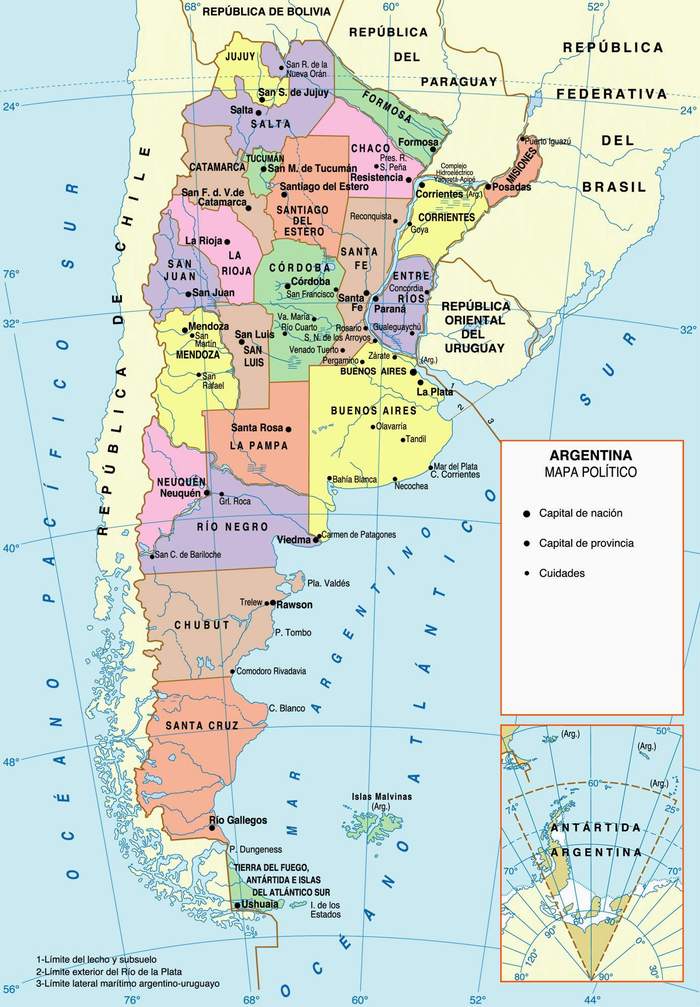
HMS Gloucester, heading for The Falkland Islands, was due to stop in at the Uruguayan Capital for supplies after sailing from Rio de Janeiro in neighbouring Brazil.

Uruguayan President José Mujica however, felt it necessary to call the Brit Ambassador to, well pretty much tell the Gloucester to bugger off. You needn’t worry sailors. You’ve missed no navy-like night of early-hours, ravishing entertainment in Montevideo. It is, if not the world’s, easily the continent’s most mind numbingly boring capital city, where a Saturday night sees you sitting alone in a downtown bar staring out into deserted streets and wishing you were back across the River Plate in the twenty-first century home of CFK and her youtube.

Uruguay cited its close economic, cultural and touristic ties with Argentina and the ‘very delicate Malvinas issue’.

While in CFK’s youtube broadcast to President José Mujica she said, ‘I read somewhere that you had told United Kingdom Ambassador that you wished to preserve your relationship with Argentina, and that is why I believe this is some sort of joint defence from our region, because we know they are coming to exhaust our natural resources. They may come for the oil, then they may come for the fishery. They are after Argentina for now and they may be after Uruguay tomorrow, if they feel they are lacking something up there. 

She went on to say, ‘I appreciate the eternal solidarity Uruguay has shown towards the Malvinas issue, for this is a question that belongs to the whole of South America.’

One might say that she went a little overboard.

The UK government has said that ‘it respects the Uruguayan right to withdraw clearance on the Royal Navy HMS Gloucester vessel to access Montevideo's port on its way to Malvinas Islands.’

Wednesday, 22 September 2010

1000s of teenagers in a park high on pollen

So much for no mischief. Yesterday’s Spring Day’s festivities were left overcast by not only the cloudy skies, but the out-of-control impish behaviour of many of the park going teenagers.

There were no incidents of hospitalisation for pollen induced illnesses, but at least seventy-four were left injured after fighting, stabbing and alcohol poisoning put a real dampener on the day.

From the Bosques de Palermo, Buenos Aires’ largest park, images of sometimes nasty and riotous behaviour flooded the evening news with teenagers giving accounts of their injuries. Several split-opened heads after silly scraps, and a stabbing after students defended themselves against good-for-nothing thieves who looked to take advantage of the large crowds.

‘The underlying issue is alcohol. And local kiosks selling alcohol to underage children,’ stated one television pundit as he analysed the situation.

Activities had begun in the park at 1pm with the announcement ‘Welcome Spring: Enjoy it without alcohol.’

But that wasn’t enough to dissuade many from seeking intoxicating entertainment. There were reports of arrests for marijuana and cocaine pocession. And one teenage girl was rushed to hospital after she slipped into an alcoholic coma. Her sad image being stretchered into an ambulance, her eyes rolling backwards and her head flopped to the side, is one her parents will no doubt cherish for many years to come.


Monday, 20 September 2010

The twenty-first of September, el Día de la Primavera, Spring Day.

It’s the day every Argentine looks forward to. The end of winter. The warming rays of the southern hemisphere sun have been giving the finger to their northern counterparts for most of the last month, but it this day, September twenty-first that officially recognises it. Sod school, sod the homework, the sun is here and the cold is gone.

What the sodding hell is the big deal you might ask? The Buenos Aires winter is like a nasty two week cold spell during an English summer (really it lasts from June 21-Sept 21), but let’s face it, it can get rather bloody chilly, with temperatures dropping to nearly freezing point, especially in the poorly heated suburbs. So when the twenty-first of September arrives, it is a day to festejar. Bid chau to those damp and dark days and buen día to a warmer Buenos Aires. The good air is here.

Men make the obligatory stop at a street-corner florist to buy a blasted bouquet of banality while their women might make a trip to the beauty salon to feminise themselves for the occasion. And all over the country everyone bids ‘Happy Spring Day’ to their colleagues and friends.

But really it is a day for teenagers, because in Argentine the twenty-first is also the national Students’ Day. (Last Friday was Teachers’ Day and sometime next month is Hairdressers’ Day.) So in Buenos Aires, as in every province, secondary school children are taking the day off and hitting the city’s plazas and parks with smiles on their freshly bronzed faces and cigarettes hanging out of their soon-to-be sunburnt lips. The maté which has kept them warm during the winter months is replaced with cold bottles of Coke, perhaps mixed with Fernet Branca and washed down with the odd bottle of Quilmes lager. They’re picnicking on empanadas, joking and laughing, and ‘adolescenting it’ up as they welcome Spring’s arrival.

We can the rest of us, only hope they don’t get into too much mischief.

Everyone is happy today as the next cold spell is a full nine months away. But don’t let jealousy get the better of you if you’re in the north; they’ll be no nose rubbing directed your way once summer is here in full, and rising temperatures are the cause of many a porteño profanity . Though nobody would switch the melting summer for an icy northern European winter, you can rest assured of that.

BUENOS AIRES: LOVE BY THE HOUR

When a young man from a provincial town in Patagonia inherits his estranged father’s pay-by-the-hour love hotel in Buenos Aires he descends into an unexpected world of sexual perversion, petty crime and loneliness. All boundaries fade away when he starts spying on the clientele of high flying sex addicts, plastic surgeons and cheating couples. In this sultry atmosphere of continuous seduction he desperately grasps for the authenticity of the world he knows. But can he escape the vortex he’s plunged into?
____________________________

BUENOS AIRES: LOVE BY THE HOUR by Han De Looper and Simon Kofoed is an exciting insight into the world of an Argentine pay-by-the-hour love hotel, and the adventures of its owner and its clientele. These hotels, known as ‘telos’ in Argentina, are commonplace in Buenos Aires and reflect the county’s non taboo attitude towards sex. Han de Looper and Simon Kofoed collaborated to bring together this piece, which is aimed at a male version of the ‘chick lit’ market. It is comprised of individual and linked stories and paints a colourful, realistic, and sometimes shockingly explicit picture that would be of interest to young open-minded and explorative readers.

Most recently, the novela's Barn Room Chapter was published in Issue 109: The International Issue of The Erotic Review Magazine.

For further information about BUENOS AIRES: LOVE BY THE HOUR, please contact Han and Simon at balovebythehour@googlemail.com


Saturday, 18 September 2010

Six months in Rome

Six months in Rome was enough time to say conclusively that I won't eat pasta for the next six. I am now super content to be back in Capital Federal dieting on empanadas, milanesas and asado. Though I do miss my 80 euro cent morning shot of coffee now that the equivalent café in Buenos Aires is going for almost double that price. A more detailed moan about current Argentine inflation will follow....

My first three weeks back in Argentina were bitterly cold ones spent in the countryside two hours outside of the city. 'But you're English, you must be used to it,' my Argentine hosts joked as I shivered beneath five layers of clothing and four blankets. During an English winter it is generally warmer indoors I told them as the damp bare-brick walls let out soaking cold air, penetrating my centrally heated bones.

But now I am comfortably installed in a cosy little eighth floor flat in the very centre of town, back blogging and newly twittered up. Six months away from Buenos Aires was tough going and it feels great to be back on the city's streets......Though I must say that the time spent in Italy was incredibly valuable. After all, if you really want to understand Argentine culture, the food, the way people speak, the hand gestures; you have to get to Italy to see where it all came from.

Saturday, 5 December 2009

The Price of Car Ownership


Dinner for two at a restaurant in Palermo - $100
Bottle of Argentine Malbec - $40
Not having your car stolen - $20


On nearly every city block near any nightspot, be it a restaurant, theatre, bar or club, vehicle protectors operate the streets of Buenos Aires, charging after dark, an average price of 20 pesos.

Cuidacoches, or trapitos (rags) as they are often referred to for the cloth they carry to give your windscreen a wipe while they look after your car, are private citizens who make a public city street their own. Their assumed task is to guide you into a space on the side of the road, and to then insure that your car is safe from thieves while you’re in the restaurant. In return they expect 20 pesos.

And if you don’t pay?

Well, don’t expect your car to be there when you get back.

Some might call it good entrepreneurial thinking, exploiting fear in the market and making a living from it. Successful businessmen have been doing it for years. Others would say it’s pure blackmail. A public citizen charging you cash to leave your car on a public street.

Some trapitos take their profession more seriously than others. Like the gentleman who works a corner near touristy Plaza Dorrego in San Telmo. He dresses in full military combats, complete with a hunting knife in his army belt. But most filling their pockets by guarding your car look like more trouble. And looking like trouble is probably good for business.

How does this illegal practice go unpunished by the authorities?

Official reports say there have only been two complaints so far this year. And the practice, though reaching new heights in prices, has been going on since many can remember. But whereas in past times, the driver chose how much of a tip to leave, now if you don’t pay what is demanded, you will at least be left with a nasty scratch down the side of your vehicle.

Furthermore there is a certain degree of trust in it all. Outside the Lagos de Palermo Golf Club, members even hand over their keys to the guy that runs the streets there. He is often to be seen shouting instructions to his boys to move cars and make extra space, while he holds on to the giant ring with keys to more than twenty five cars hung there. Twenty five cars with a value of US$15,000 – US$30,000; that’s a total of perhaps US$500,000 in his hands.

So it seems porteños prefer to just pay and be done with it. But if possible when they come back to their car, to ensure that the cuidacoche has at least done something for his money.

Dinner for two at a restaurant in Palermo - $100

Bottle of Argentine Malbec - $40

Not having to worry about your car on the street - PRICELESS